

What is regenerative agriculture applied to coffee?
Regenerative agriculture is an agricultural approach that aims to improve the state of natural resources over time: soil fertility and life, water availability, and plant and animal diversity. It starts from a simple observation: living soil produces better and for longer than soil that is only fed with fertilizers.
There is no single legal definition of regenerative agriculture. It is recognized rather by its practices:
- keeping the soil covered, with plants or mulch, to limit erosion;
- feeding it with organic matter, especially compost;
- working it as little as possible;
- multiplying the cultivated species and trees;
- saving water.
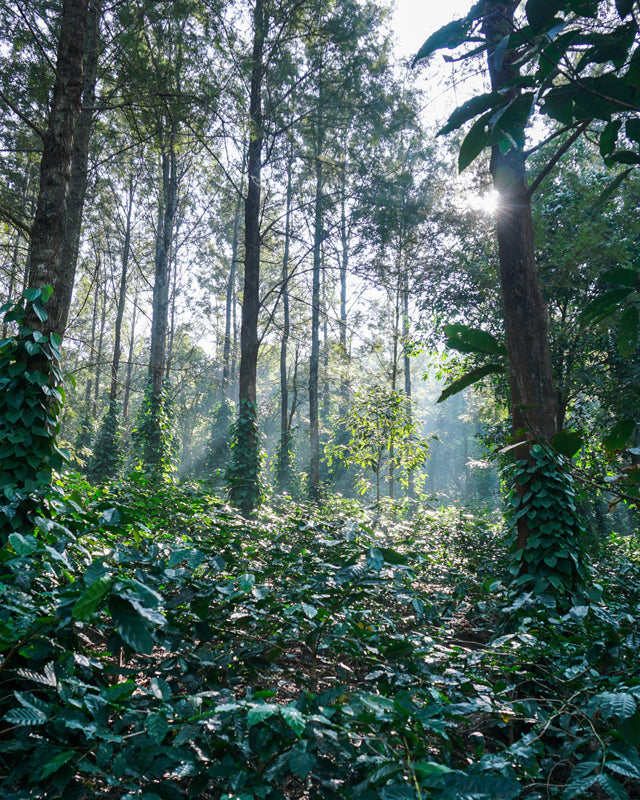
The coffee plant is well suited to this approach. It is originally an understory shrub, which naturally grows in the shade of larger trees. Growing it in the middle of a forest, rather than in full sun on a bare plot, is somehow returning it home.
Regenerative agriculture, organic, and biodynamics: what are the differences?
Regenerative agriculture does not replace organic or biodynamics: it stands out for its objective. Organic farming sets prohibitions (no pesticides or synthetic fertilizers), biodynamics adds a method, and regenerative agriculture is judged on a result, the improvement of the soil and ecosystems.
| Organic farming | Biodynamics | Regenerative agriculture | |
|---|---|---|---|
| Main objective | Produce without synthetic chemical inputs | Treat the farm as a living organism | Restore the soil, water, and biodiversity |
| Framework | European regulation, annual controls | Method derived from Rudolf Steiner's lectures (1924) | No single legal definition |
| Typical practices | Organic fertilizers, natural pest control | Compost, preparations, attention to natural rhythms | Soil cover, compost, trees, crop diversity |
| Certification | Organic label mandatory for the claim | Private labels | Recent private labels, still not very widespread |
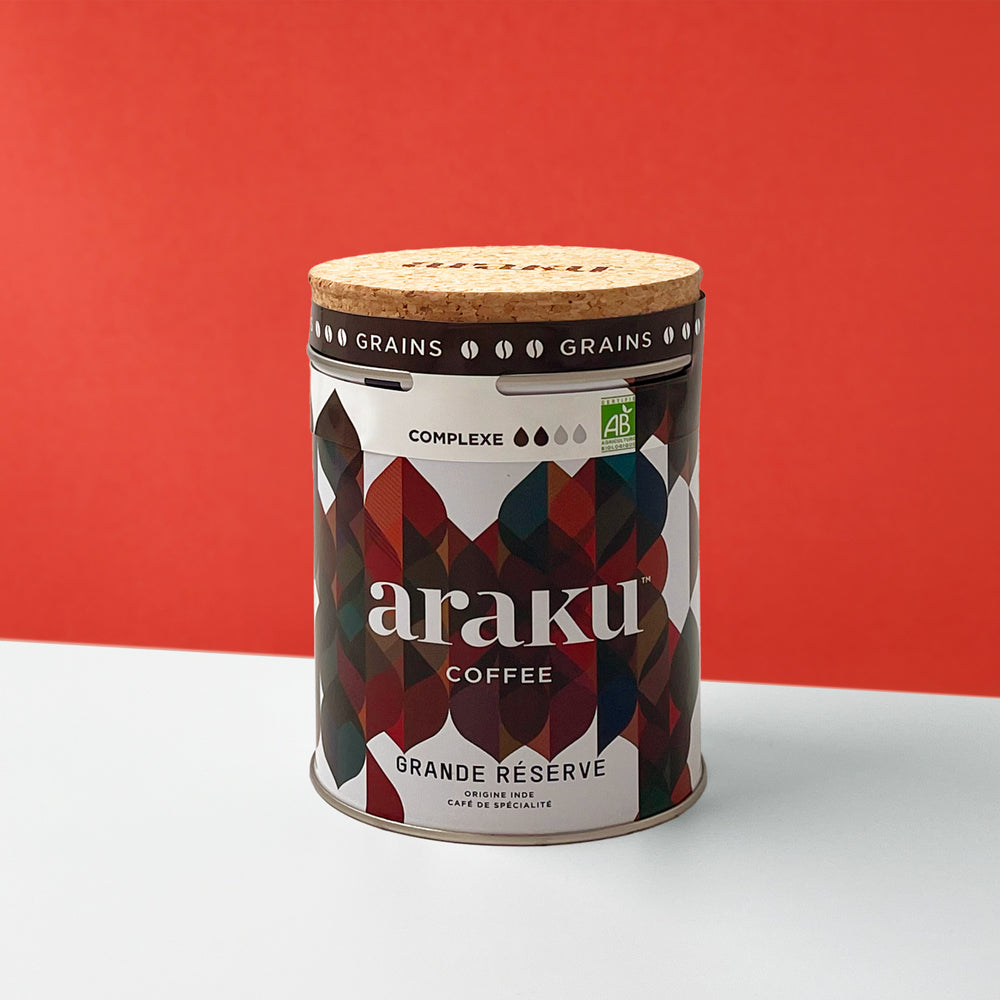
The three approaches are often combined. This is the case in the Araku Valley: Araku coffees are certified organic and grown according to the principles of biodynamics, with a regenerative agriculture approach that goes beyond the organic specifications. We explain this difference in our article on why we go further than organic and fair trade.
How regenerative agriculture is practiced in the Araku Valley
In the Araku Valley, regenerative agriculture is based on four pillars: agroforestry, locally produced compost, the principles of biodynamics, and plot mapping done with the villages. The valley is located on the Eastern Ghats highlands, at an altitude of more than 1,000 m, a region of coffee cultivation still little known in Europe (see our article on coffee cultivation in India).
Agroforestry coffee, grown under trees
Agroforestry consists of growing coffee among other trees, which provide shade, protect the soil, and shelter a variety of wildlife. All Araku coffees are forest coffees. Coffee plants grow notably under the shade of silver oaks, next to mango trees and other fruit trees. These trees are also a source of income and food for families.
Soil fed with locally produced compost
Compost is the raw material of regenerative agriculture in Araku. It is of plant or animal origin, produced locally, and rich in bio-inoculants, that is, useful microorganisms that restart soil life. No synthetic chemical products are used, and the work is done by hand, from pruning to harvesting. Tools and training in regenerative practices are provided free of charge to farmers.
Biodynamics, according to the principles taught by David Hogg
Biodynamics is a form of organic farming that considers the farm as a living whole and takes into account natural rhythms, such as those of the moon. At Araku, farmers grow according to its principles, with the support of David Hogg, a regenerative agriculture consultant and founding member of the Biodynamic Association of India. To learn more, read our article dedicated to biodynamic farming.
Plot mapping shared with the villages
Regenerative agriculture cannot sacrifice everything to coffee. The lands are therefore mapped with the communities to balance coffee crops, firewood, cereals, livestock, and primary forest. The plots of 40 pilot villages have also been analyzed according to 11 criteria (sunlight, soil type, altitude, forest shade, etc.), which has led to the emergence of six distinct terroirs.
What results after twenty years in the Araku Valley?
The results of regenerative agriculture in the Araku Valley are first measured in trees and water. More than 30 million trees have been planted in twenty years in the region, as part of the program led with the Naandi Foundation. And the amount of water used for the washed coffee processing, the step that separates the cherry from the green bean, has been divided by 36 in ten years.
This work has been recognized beyond the coffee world. In 2020, the Rockefeller Foundation selected the "Arakunomics" vision led by Naandi among the ten winners of its Food System Vision Prize 2050, out of more than 1,300 applications.
Regenerated soil is not made in one season. These figures are the result of a commitment that began in 2001, when the first coffee plants were planted on micro-plots of less than one hectare.
An ecosystem more resilient to bad weather
Crop diversification makes the Araku Valley ecosystem more resistant to bad weather. On the same plot, coffee grows next to fruit trees (mangoes, citrus, guavas), pepper plants that climb along the shade trees, and food crops. This diversity protects on several levels:
- the different layers of vegetation slow down the wind and driving rain;
- roots and soil rich in organic matter hold the earth and water better during heavy rains;
- if one crop suffers, the others continue to feed the family and provide income.
The risk is not theoretical. On October 12, 2014, Cyclone Hudhud made landfall near Visakhapatnam, about a hundred kilometers from the valley, with sustained winds of 185 km/h. In the Araku region, coffee and pepper plantations were heavily damaged and many shade trees were felled. A plot that mixes species and crops does not resist everything, but it rarely loses everything at once.
Why regenerative agriculture also relies on farmers
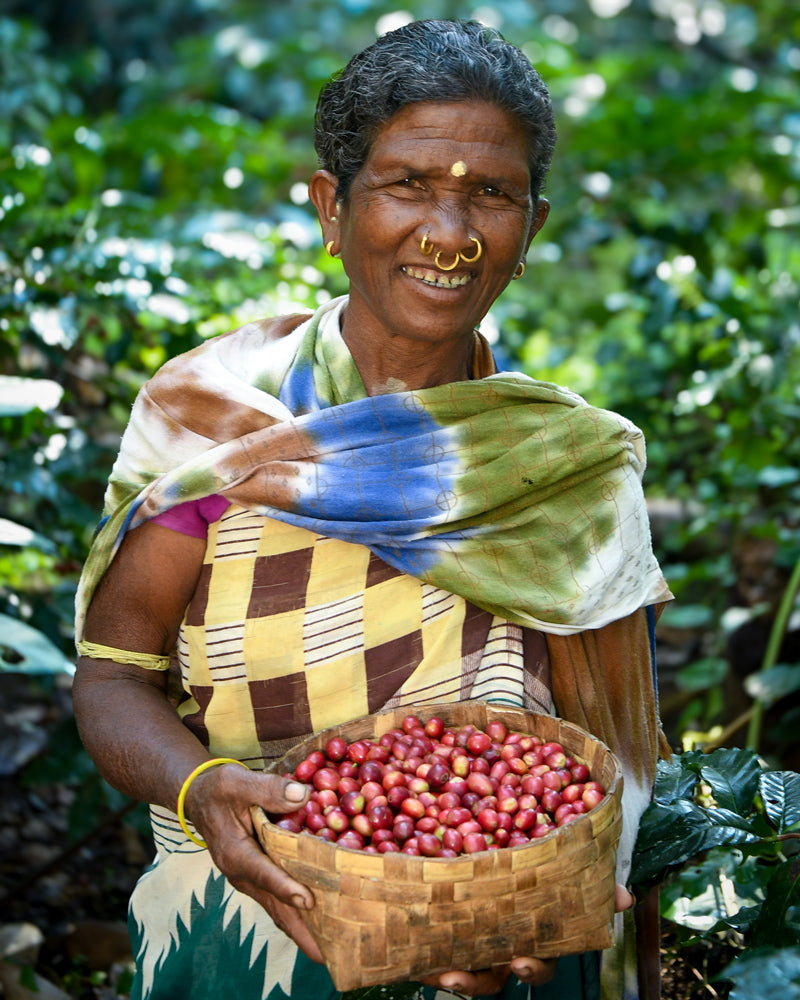
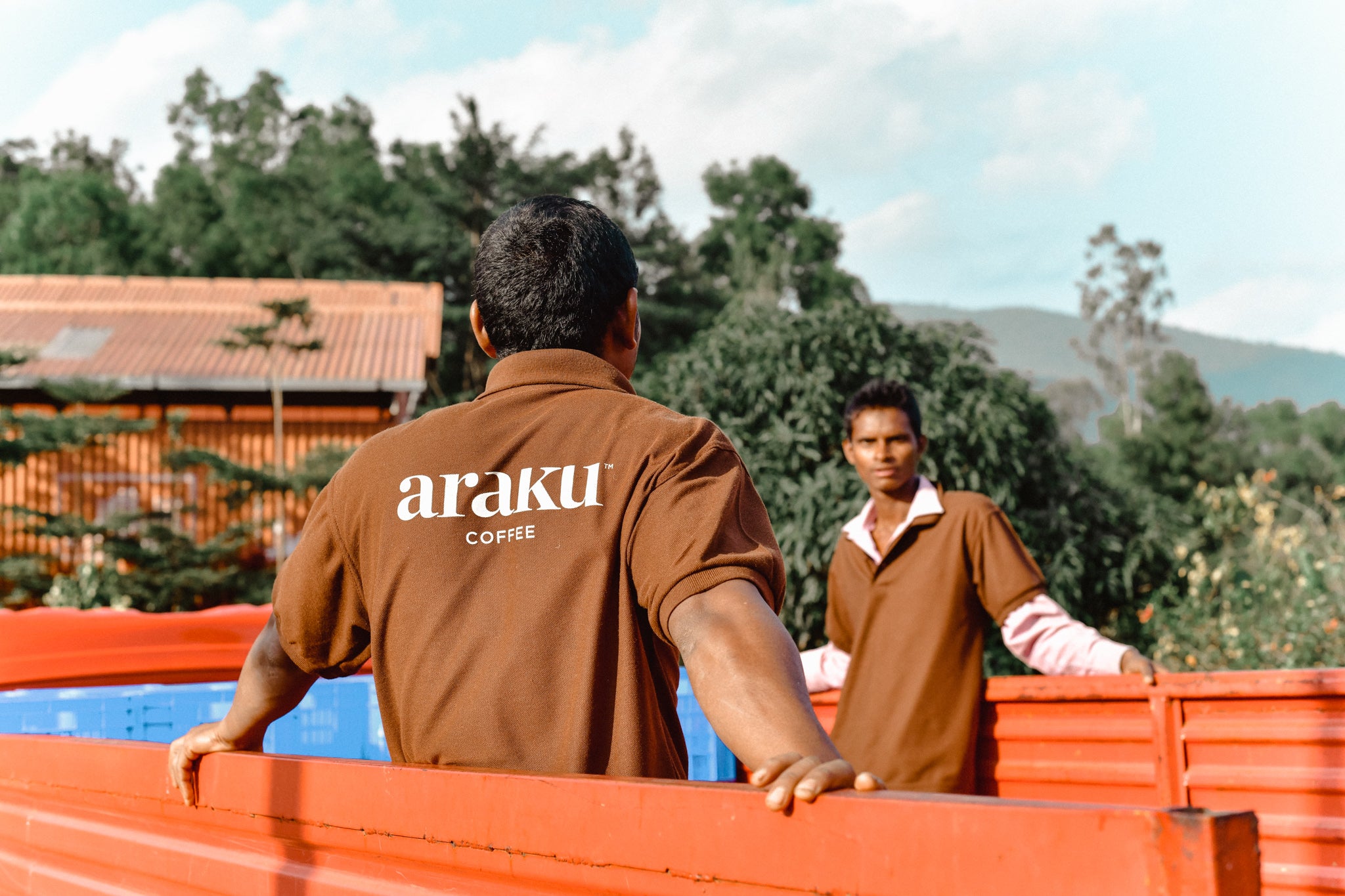
Regenerative agriculture only lasts if farmers can make a living from it. In the Araku Valley, these are Adivasi farmers, members of the region's tribal communities, who own their plots. They have been united since 2007 in a cooperative that also owns the coffee processing unit.
This model, which we call Arakunomics, is based on a few concrete rules:
- cherries are paid on the day of harvest;
- prices are set in advance and are higher than those of the conventional market;
- quality is rewarded, which encourages soil care and careful picking;
- the supply chain, from the plot to the brand, belongs to those who make it live.
This security gives families the time to invest in their land: planting trees that will bear fruit in ten years, preparing compost, giving up chemical shortcuts.
What regenerative agriculture changes in your cup
Regenerative agriculture is tasted above all through the quality and clarity of the terroirs. Coffee plants that ripen slowly in the shade, on living soils, and cherries harvested by hand produce precise coffees. All Araku coffees are rated at least 86/100 by the SCA (Specialty Coffee Association), while the specialty coffee threshold is 80/100.
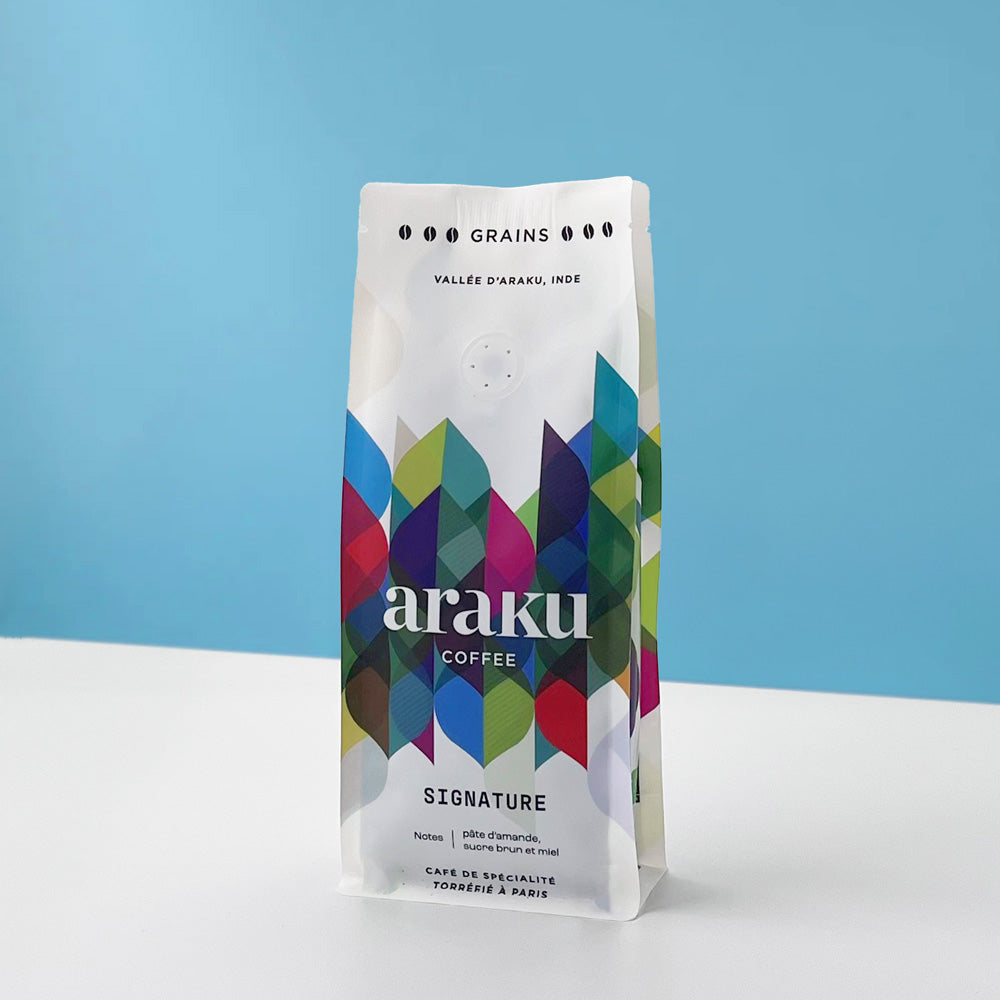
Each terroir keeps its character. The Signature coffee, grown under the shade of silver oaks, offers notes of almond paste, brown sugar, and forest honey. To compare the six terroirs born from the valley's mapping, the Red Earth box brings them together in beans. And if you prefer to choose freely, the entire range is gathered in our Indian specialty coffees, roasted in Paris.
In summary
- Regenerative agriculture aims to restore the soil, water, and biodiversity, not just to avoid degrading them.
- It has no single legal definition, unlike organic, but is recognized by its practices: compost, covered soil, trees, diversity.
- In the Araku Valley, it combines agroforestry, local compost, biodynamic principles, and shared land mapping.
- More than 30 million trees planted in twenty years, and 36 times less water for washed processing in ten years.
- It holds because the Adivasi farmers, united in a cooperative, own their lands and are paid on the day of harvest.
Frequently asked questions
Is regenerative agriculture a label?
No, regenerative agriculture is not an official label: it is an approach, without a single legal definition. Private certifications are beginning to appear. The Rainforest Alliance announced a dedicated standard in September 2025, initially open to coffee. The safest thing is to look at the described practices and the traceability of the supply chain.
Is coffee from regenerative agriculture necessarily organic?
No, not necessarily. A producer can adopt regenerative practices (compost, trees, covered soil) without being certified organic. Conversely, organic farming prohibits synthetic inputs without requiring soil improvement. Araku coffees combine both: they are certified organic and grown according to a regenerative approach and the principles of biodynamics.
What is agroforestry coffee?
Agroforestry coffee is coffee grown under the cover of other trees, rather than in full sun. These trees shade the coffee plants, which slows the ripening of the cherries, protects the soil from erosion, and shelters birds and insects. In the Araku Valley, coffee plants grow notably under silver oaks and fruit trees.